
Why Hide Tracks on CS2 Trades?
2024-11-18 - 8 min read
By Skinflow


CS2 skin trading is big business. Millions of players buy, sell, and swap items every day. Some skins are worth hundreds or thousands of dollars.
Valve watches trading closely. Break the rules and you can lose access to your account or your inventory. Because of that, some traders try to hide their tracks — meaning they hide what they trade and how they trade.
Why do people do this? Is it ever worth it? This guide breaks down the main reasons, the risks, and safer ways to protect yourself.
Table of contents
- What “hiding tracks” means
- Avoiding Valve detection
- Getting around trade limits
- Legal risks
- Protecting your privacy
- Hiding scams and fraud
- What happens if you get caught
- FAQ
What “hiding tracks” means
“Hiding tracks” means making your trades harder to follow. Traders might use VPNs, extra accounts, or third-party sites to mask who they are and what they do.
Reasons fall into two groups:
- Legit concerns: privacy, scam protection, or keeping high-value items safe.
- Rule-breaking: skipping trade holds, dodging bans, or covering up stolen skins.
Knowing the difference helps you trade safely without putting your Steam account at risk.
Avoiding Valve detection
What triggers flags
Valve uses automated systems to spot unusual trading. These patterns often get flagged:
- Many platforms at once — jumping between bots and marketplaces quickly.
- High-volume trading — dozens of trades in a short window.
- Frequent IP or VPN changes — looks like someone is hiding their location.
What can happen
If Valve flags your account, you may face:
- Account locks until you verify your identity.
- Trade bans that block you from moving skins — sometimes permanently.
Some traders hide activity to avoid these penalties. That often creates new risks instead of fixing the problem. Read more about how Valve handles suspicious trades.
Getting around trade limits
Valve’s main limits
Steam puts guardrails on trading to stop fraud. The biggest ones:
- 15-day trade holds on some trades without Steam Guard mobile auth.
- 7-day cooldown on newly bought or received items.
- Market limits on certain high-value or restricted skins.
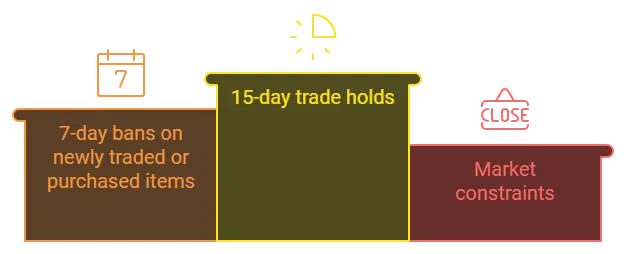
These rules slow down honest traders too. That frustration pushes some people toward shady workarounds.
Common workarounds (and why they’re risky)
- Alt accounts — moving items through extra profiles to hide the source.
- Off-platform deals — trading outside the Steam market to skip holds.
- Private inventories — hiding what you own so others cannot track patterns.
All of these can violate Steam rules. Detection often leads to bans and lost skins.
Legal risks
Past cases
CS skin gambling and fraud have drawn legal attention before. Valve has sued sites tied to illegal gambling and skin abuse.
People running shady operations may hide tracks to avoid:
- Lawsuits, fines, or criminal charges.
- Public exposure that ruins their name in the community.
VPNs, alt accounts, and off-site tools make investigations harder — but they do not make illegal activity legal.
Protecting your privacy (the right way)

High-value traders are targets. A public inventory can invite scams, phishing, and hacks.
Common threats include:
- Phishing links that steal login details.
- Inventory stalking — rivals watch your trades for an edge.
- Account theft — hackers grab skins worth real money.
Safe privacy steps
You can protect yourself without breaking rules:
- Set your Steam inventory to private.
- Use trusted marketplaces with a solid reputation.
- Enable Steam Guard and 2FA on every account.
- Trade at varied times so patterns are harder to copy.
Hiding scams and fraud
Scammers also hide tracks. In 2022, hackers stole about $6 million in skins from a major trading site.
Fraudsters hide activity to:
- Stay off Valve’s radar.
- Block recovery of stolen items.
- Run the same scam again under a new name.
They often chain alt accounts, VPNs, and off-site trades. If a deal feels rushed or secretive, walk away.
What happens if you get caught
Hiding tracks usually breaks Valve’s terms. Banned actions include:
- Skipping trade holds or cooldowns.
- Using unauthorized third-party tools.
- Fraud or suspicious bulk trading.
Penalties can include:
- Trade bans — temporary or permanent.
- Full account suspension — you lose access to your library.
- Legal action for serious or repeated abuse.
The cost is not just skins. Your reputation in the CS2 community matters too.
Bottom line
Some traders hide tracks for privacy. Others do it to cheat the system. Most shortcuts break Steam rules and backfire.
Trade on trusted sites, follow Valve’s terms, and use basic security. That keeps your inventory and your account safe.
FAQ
Why do some traders hide their tracks?
To avoid Valve flags, skip trade limits, stay private, or cover scams. Many methods break the rules.
Is hiding tracks against Valve’s rules?
Yes. Bypassing holds, using banned tools, or hiding fraud violates Steam’s terms of service.
What are the risks?
Trade bans, account loss, legal trouble, and stolen skins. The community may also stop trusting you.
How do I protect my info while trading?
- Use secure, well-known trading platforms.
- Turn on Steam Guard and 2FA.
- Keep your inventory and trade history private.
- Only trade with people or sites you trust.
Are there legit reasons to limit visibility?
Privacy and scam protection are valid. Just make sure every step still follows Valve’s rules.